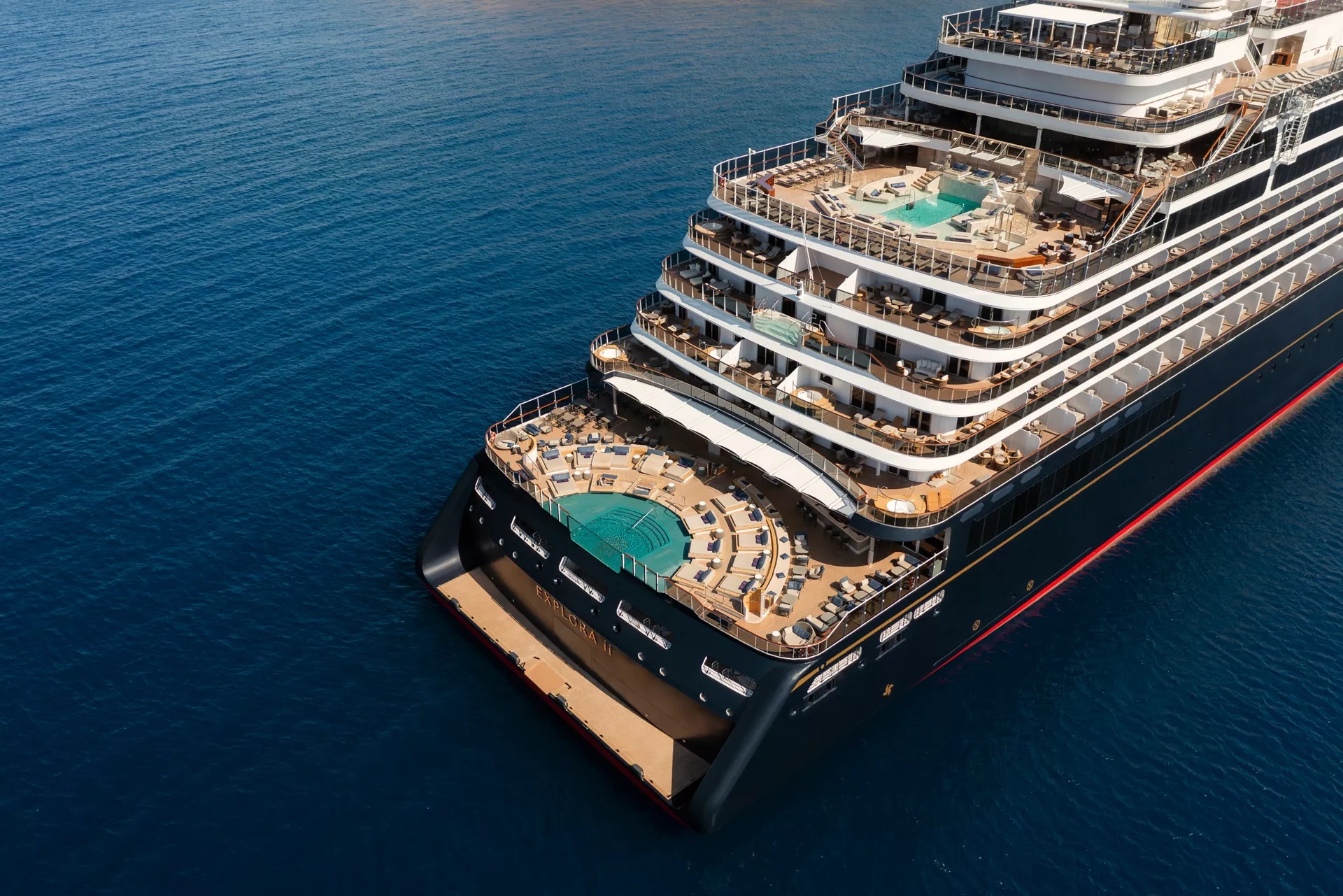


Viking Sky: Venice, the Adriatic & Greece in 7 Nights
Just booked this one, and my clients are genuinely thrilled. A seven-night voyage aboard Viking Sky sailing from Venice through the Adriatic and into Greece — it's the kind of itinerary that hits every note: history, coastline, great food, and ports that reward slow exploration. If this route has been sitting on your own list, read on.
At a Glance
- Ship: Viking Sky — Viking Ocean Cruises
- Route: Venice (Chioggia) to Athens (Piraeus)
- Voyage length: 7 nights
- Region: Adriatic & Eastern Mediterranean
- Key ports: Zadar, Dubrovnik, Kotor, Corfu, Katakolon (Olympia)
- Cruise line style: Destination-focused, adults-only, elegantly understated
About Viking Sky
Viking Sky is one of the mid-size ships in Viking Ocean's fleet. She carries roughly 930 guests — small enough to feel personal, large enough to offer genuine amenities. The onboard atmosphere leans relaxed and intellectual. There's no casino. No production-show chaos. What you get instead is thoughtful programming: lectures tied to the ports you're visiting, a well-curated library, and dining that prioritizes quality over volume.
The included fare covers a lot. Wi-Fi, gratuities, beverages with meals, a shore excursion in each port, and specialty dining — it's a genuinely inclusive model that makes budgeting easier. Viking attracts travelers who want to arrive at each port feeling genuinely ready to engage with it, not recover from the ship.
If you want a deeper look at how Viking stacks up against other premium lines, the Viking River Cruises vs. AmaWaterways vs. Uniworld comparison offers some useful context on the Viking philosophy — even on the ocean side, the DNA is the same.
The Itinerary: Port by Port
Venice (Chioggia), Italy — Embarkation
This sailing embarks from Chioggia, a working fishing village at the southern edge of the Venetian Lagoon. It's quieter than Venice proper, and honestly that's not a bad thing. My clients are arriving a few days early and spending time in Tuscany before boarding — a smart way to ease into European time and arrive at the ship relaxed rather than jet-lagged.
Zadar, Croatia
Zadar is the Adriatic's underappreciated gem. The old town sits on a narrow peninsula, ringed by Roman ruins and medieval churches. Alfred Hitchcock once called it home to the most beautiful sunset in the world — and the Sea Organ, a shoreline instrument played entirely by wave energy, is genuinely one of the more surprising things you'll encounter on any port day. Give it more time than the average traveler does.
Dubrovnik, Croatia
Dubrovnik is one of those ports that earns every word written about it. The limestone walls, the Stradun, the blue Adriatic below — it holds up in person. The crowds are real, though, so the key is timing. Go early, walk the city walls before the tour groups arrive, and save the afternoon for a boat ride to Lokrum Island or a quiet lunch in the Lapad neighborhood. If you want a deeper dive into spending a port day here well, the Dubrovnik shore excursion guide covers it honestly.
Dreaming of your next voyage?
Let a Cruise Planners advisor build you a custom itinerary — no booking fees.
Kotor, Montenegro
Kotor might be the highlight of the whole route for many travelers. The Bay of Kotor is a drowned river canyon that looks like a fjord — the approach by ship is quietly dramatic. The medieval old town is compact and walkable, ringed by Venetian-era walls that climb straight up the limestone karst above the city. It's tender access here, so plan your morning accordingly and get ashore early.
Corfu (Kerkyra), Greece
Corfu carries centuries of Venetian, French, and British influence, and you feel it the moment you walk the old town. The Liston promenade was modeled on the Rue de Rivoli in Paris. The Old Fortress is worth the climb. For something quieter, head north toward Paleokastritsa — turquoise water, a clifftop monastery, and far fewer people than the port area.
Katakolon (Olympia), Greece
Katakolon is a small port village, but it's really the gateway to Ancient Olympia — where the Olympic Games began in 776 BC. The archaeological site is one of the most evocative in Greece. Standing at the original starting line of the ancient stadium is one of those quiet, surprisingly moving travel moments. Don't skip the archaeological museum; it houses the Temple of Zeus pediment sculptures and the Hermes of Praxiteles.
Athens (Piraeus), Greece — Disembarkation
The voyage ends at Piraeus, the port of Athens. Most travelers extend here for at least a night — and it's hard not to. The Acropolis at sunrise, before the crowds arrive, is a different experience entirely from midday. If you've never been, build in the time.
Why This Cruise Appeals to Culturally Curious Travelers
This itinerary is not for the beach-chair crowd. It's for travelers who genuinely want to stand where history happened — Roman forums, ancient Greek temples, medieval Venetian walls. Every port has layers. The seven-night format is long enough to feel unhurried but short enough to stay focused.
It's also an excellent option for couples who've done Western Mediterranean routes before and want to push into the Adriatic without committing to a longer voyage. The pre-cruise land program adds significant value. Arriving in Tuscany before boarding is the kind of add-on that transforms a cruise trip into a full European journey.
October is a particularly good month for this region. The summer heat has eased. Crowds at Dubrovnik and Corfu are noticeably thinner. And the light — especially in Greece — has that golden, low-angle quality that makes every photograph better.
Working with a Cruise Advisor on a Voyage Like This
Bookings like this one involve more moving pieces than they look like on paper. Pre-cruise land extensions, flight coordination, travel protection, shore excursion timing, onboard credit — each element has to fit with the others. When my clients came to me with this itinerary in mind, we talked through the land program options, discussed the itinerary alterations Viking had already communicated (Chioggia instead of central Venice; Zadar instead of Split), and made sure the overall flow made sense for how they actually travel.
That's the part of trip planning that doesn't happen when you book directly online at 11pm. Having someone in your corner who tracks those changes, flags what matters, and helps you make decisions with full context — that's the value. If you're curious how that process actually works, the Travel Advisor vs. Booking a Cruise Online post explains it well.
And if you're Colorado-based and wondering what working with a local advisor looks like, this post on why local beats online is a good starting point.
When you're ready to start thinking about your own Adriatic itinerary, Jeffrey Lazo at Ohana Cruises is here to help. Reach out and let's build the trip you've been picturing.